What defines turf performance in practice?
Turf performance is defined by behaviour, not by a single feature or specification.
What matters is how the tire behaves under load, during movement, and over time.
In real-world use, turf outcome is shaped by the interaction between five factors:
- Ground pressure
How load is distributed across the footprint. - Tread interaction
How tread geometry interacts with grass during straight-line movement, turning, and braking. - Machine weight
Including attachments, load shifts, and dynamic forces. - Usage pattern
Turning frequency, turning radius, speed, surface transitions, and operating conditions. - Tire shape
Construction of the tire, how the tire behaves under specific conditions of the load, that determine footprint and high stress zones in footprint.
Optimising one factor in isolation rarely prevents turf damage.
Predictable turf performance comes from balancing all five.
In daily operation, turning frequency and turning radius deserve particular attention. They amplify even small imbalances. Selecting tires based on static machine weight alone is often insufficient — attachments and dynamic loads matter just as much.
Why does turf damage occur during turning?
Turf damage during turning is rarely caused by tread pattern alone.
Most damage occurs when lateral shear forces exceed what the turf can tolerate. These forces are primarily driven by:
- casing stiffness
- inflation pressure
- footprint shape
- steering geometry
During a turn, the tire must deform laterally.
If the casing is too stiff, the footprint cannot adapt smoothly.
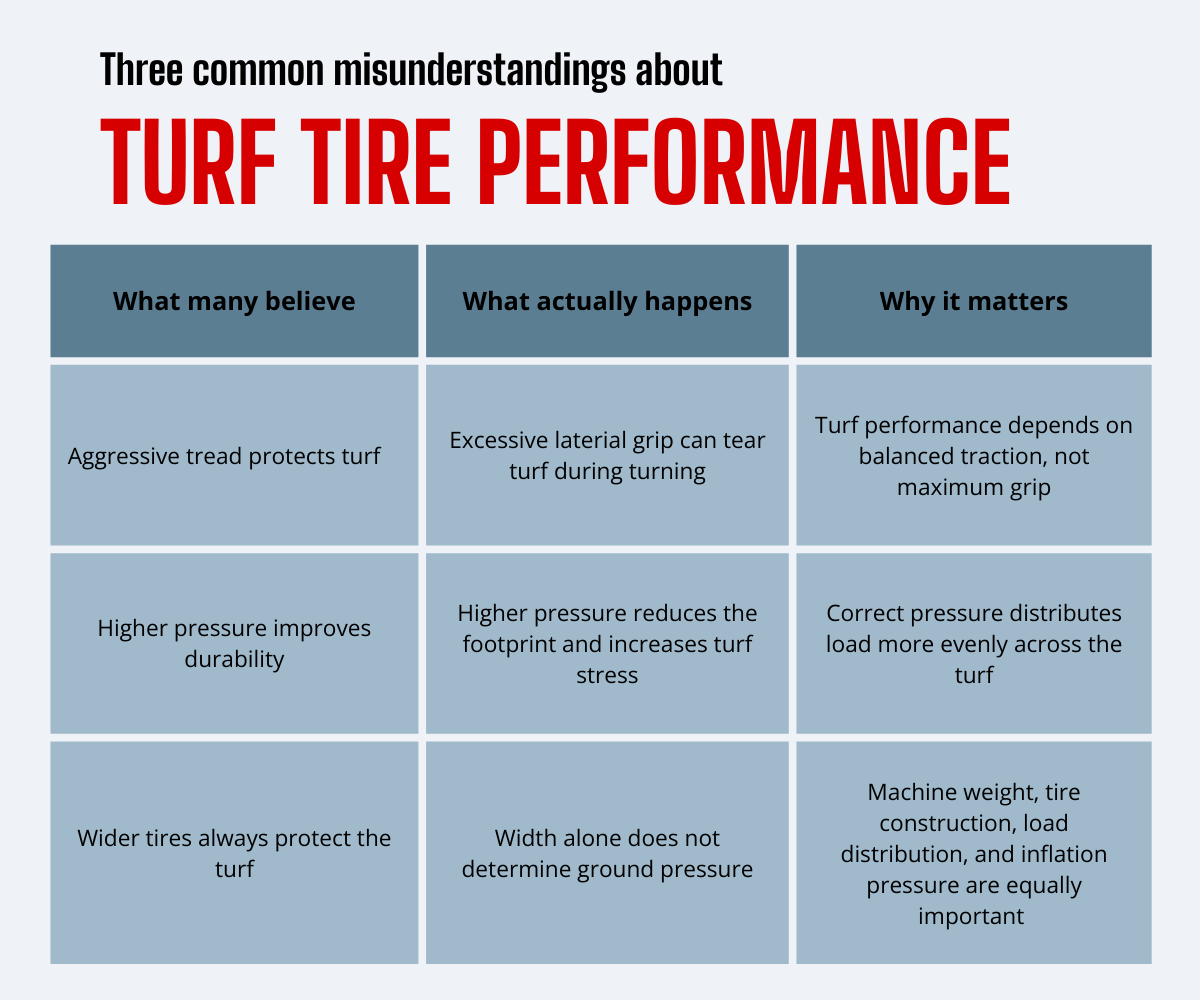
If inflation pressure is too high, the footprint becomes smaller and more concentrated — increasing shear stress.
Aggressive tread patterns can worsen damage, but they are usually a secondary contributor.
If turf damage appears mainly during turning, start by checking inflation pressure — not tread design.
If damage increases on tight turns, it often indicates insufficient lateral compliance for the application.
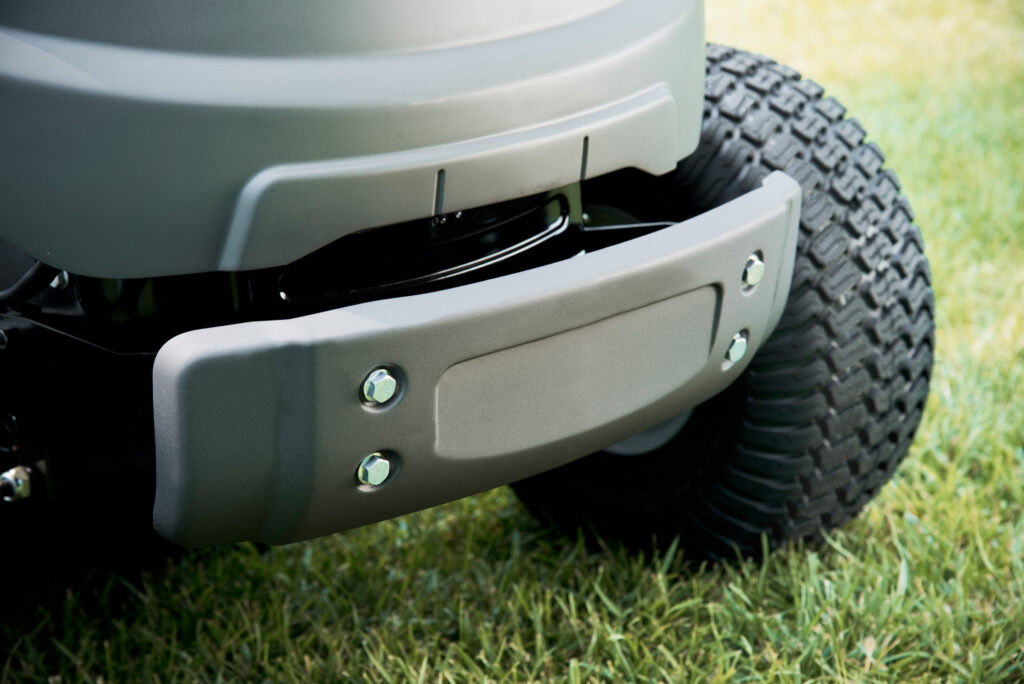
Why do turf tires with similar tread patterns behave differently?
Tread pattern alone does not define turf behaviour.
Turf tires with similar-looking tread designs can behave very differently due to differences in:
- casing construction and stiffness
- rubber compound behaviour under load
- footprint shape and pressure distribution
- dynamic deformation during steering
In real use, how a tire flexes matters as much as how it grips.
A tire that looks turf-friendly on paper can still behave aggressively if deformation is poorly controlled.
When comparing turf tires, load rating, ply construction, and casing characteristics often explain behaviour differences more clearly than tread pattern. Where possible, compare tires under identical load and pressure conditions to isolate what actually drives performance.
Why can “too much grip” damage turf?
On turf, maximum grip is rarely the goal.
Excessive lateral grip can prevent controlled slip during turning. When slip cannot be released progressively, shear forces are transferred directly into the turf surface, increasing scuffing and tearing.
A well-balanced turf tire provides:
- sufficient traction for control
- controlled slip during turns
- predictable release of lateral forces
In professional turf applications, predictability matters more than peak grip. Tires that behave consistently cause less damage than tires that feel aggressively planted.
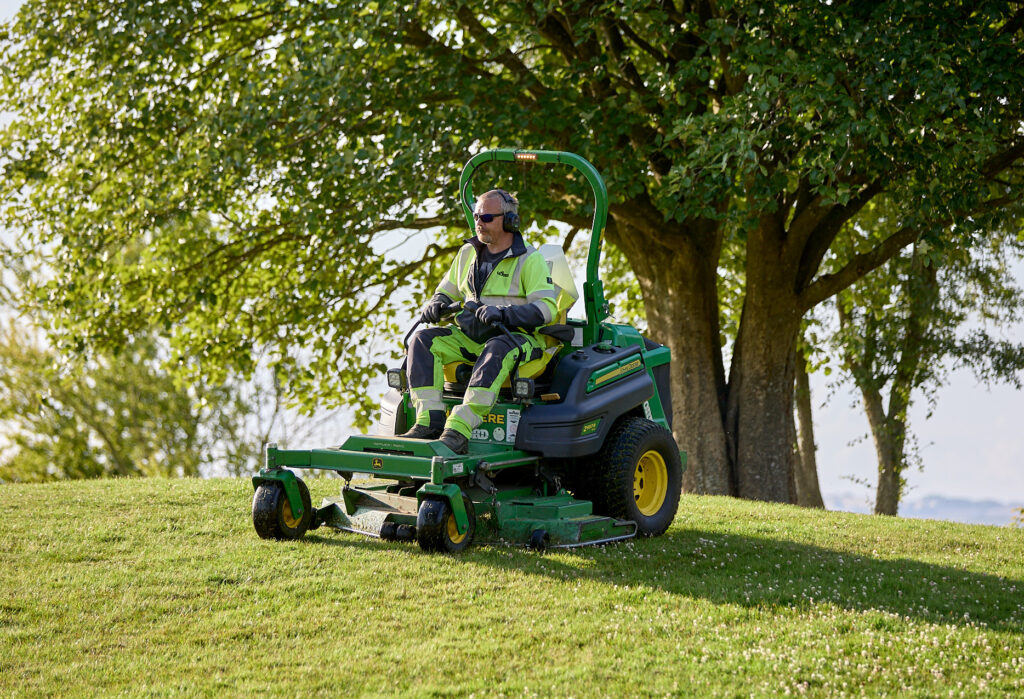
Why does turf behaviour change over a tire’s life?
Turf performance does not remain constant over a tire’s lifetime.
As a tire wears:
- tread geometry evolves
- casing response changes
- footprint pressure distribution shifts
If wear develops unevenly or unpredictably, turf behaviour can deteriorate even when tread depth still appears acceptable. This is why some turf tires lose their turf-friendly behaviour long before reaching their technical end of life.
Predictable wear patterns are critical.
They help ensure consistent behaviour from first use to last — not just when the tire is new.
What causes uneven or unpredictable wear?
In turf applications, uneven wear usually results from multiple factors acting together, including:
- incorrect inflation pressure baselines
- misaligned machine geometry
- frequent turning under high load
- tire stiffness poorly matched to the application
Once wear becomes irregular, footprint shape and traction behaviour change, making turf performance increasingly difficult to control. At this stage, tread design alone cannot compensate.
Preventing uneven wear is just as important as choosing the right tire.
Why does the same turf tire behave differently on different machines?
A turf tire never works in isolation. Its behaviour depends on the machine–tire–surface system.
Key influencing factors include:
- machine weight distribution
- steering geometry
- suspension characteristics
- attachment use
- operator behaviour
A tire that performs well on one machine can behave aggressively on another if load transfer or steering forces differ. This is why application context matters as much as tire specification.
When behaviour varies between machines, comparing axle loads and steering angles often reveals more than looking at the tire alone.
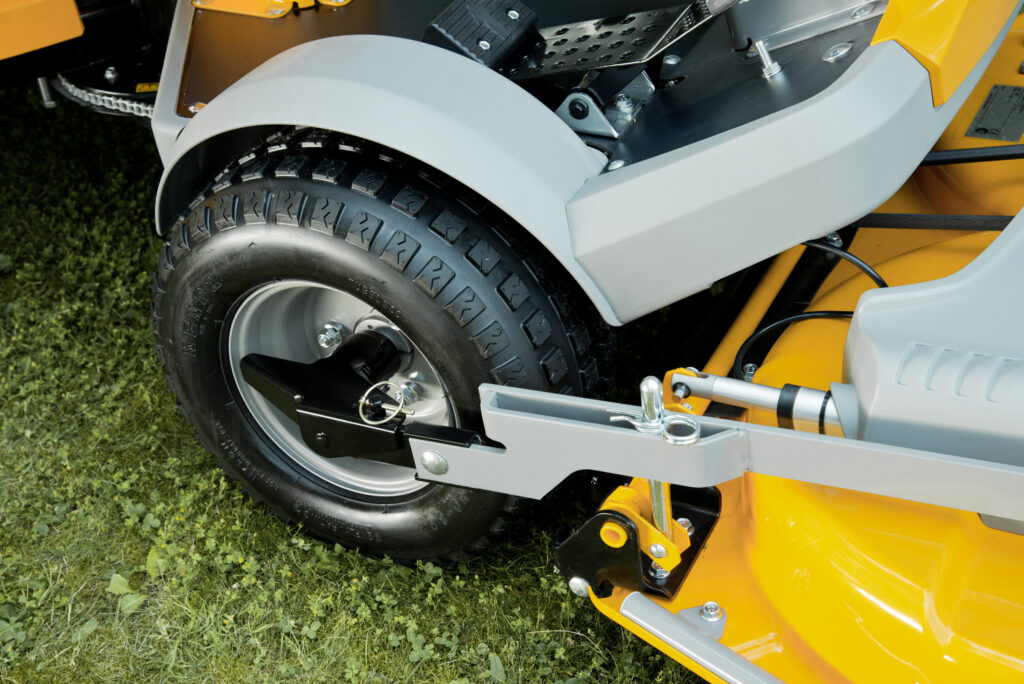
How should you choose between two turf tires that both “fit”?
Fitment confirms that a tire can be mounted — not how it will behave.
When choosing between turf tires that technically fit the same machine, evaluate:
- expected load cycles
- turning frequency and radius
- surface sensitivity
- seasonal operating conditions
- tolerance for wear-related performance change
In most cases, the better choice is the tire whose behaviour remains most predictable across the full duty cycle — not the one with the softest compound or widest footprint.
A useful rule of thumb is to ask how often the machine turns, not just how fast it drives. Clarifying whether surface protection or uptime is the higher priority helps narrow the choice.
Maintaining predictable turf behaviour
Pressure management
Inflation pressure is one of the most influential — and most underestimated — factors in turf performance. Fixed pressures rarely work across changing loads and conditions. Pressure should be adapted to actual operating weight and surface sensitivity.
Wear tracking
Visual inspection alone often misses early warning signs. Tracking wear progression and correlating it with changes in turning behaviour helps anticipate performance degradation before turf damage occurs.
Alignment and machine setup
Small alignment deviations can have a disproportionate effect on turf over time. Verifying camber and caster during tire changes — not only mechanical service — helps preserve predictable behaviour.
Common mistakes that undermine turf performance
Even experienced turf professionals repeatedly make choices that reduce predictability, including:
- using aggressive tread designs in turf-only environments
- ignoring turning behaviour during tire selection
- relying on generic pressure baselines
- substituting agricultural tires where turf protection is required
These choices may seem acceptable short-term but often lead to inconsistent behaviour, accelerated damage, and reduced predictability over time.